Why the Anime Critics Love Is the Worst Thing to Watch on Your Morning Subway Ride

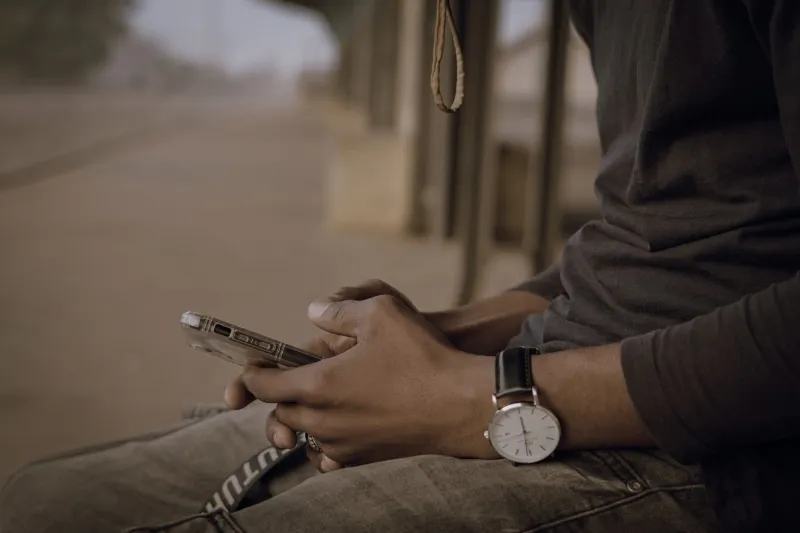
Photo by Photo by Chang Hank on Unsplash on Unsplash
There's a specific kind of frustration that hits when you're standing on a packed subway car, one hand gripping the overhead rail, phone tilted at a weird angle, trying to appreciate a breathtaking panoramic shot of a fictional city skyline — on a 6.1-inch screen, surrounded by strangers, with one earbud dangling because you bumped into someone at the last stop.
You picked this show because everyone said it was a masterpiece. You've seen it trending on Reddit, quoted in YouTube essays, and name-dropped in every 'anime you need to watch before you die' thread imaginable. And yet, somehow, right now, it is absolutely not working.
Here's the thing: you're not doing it wrong. The show is just built for a completely different situation than the one you're in.
The 'Masterpiece Trap' Is Real, and It's Eating Your Commute Time
There's a pattern that almost every anime fan hits eventually. You load up something critically acclaimed — maybe a slow-burn psychological thriller, a visually dense fantasy epic, or one of those dialogue-heavy dramas where every word carries weight — and you watch it in fifteen-minute bursts between train stops. Then you wonder why you feel nothing.
It's not a you problem. Shows like these are engineered for sustained, focused attention. The pacing assumes you're sitting still, probably in the dark, with both ears plugged in and zero interruptions. Every lingering wide shot, every moment of deliberate silence, every carefully layered piece of background music — it all works together as a complete sensory experience. Break that up with tunnel noise, a screaming toddler two seats over, or the constant buzz of your notifications, and the whole thing falls apart.
Critical acclaim and mobile watchability are measuring completely different things. One rewards ambition, craft, and emotional depth in ideal conditions. The other rewards something way more practical: resilience to chaos.
What Actually Survives a Commute
Here's where it gets interesting. The anime that genuinely thrives on your phone during a commute tends to be the stuff that doesn't get breathless writeups in prestige publications. We're talking slice-of-life comedies, workplace gag shows, cozy school dramedies, and those low-stakes 'friends hanging out and doing nothing particularly important' series that somehow get labeled as 'comfort watches' and then quietly forgotten by the algorithm.
Think about why those work so well. The comedy timing is self-contained — you get the joke, you laugh, you move on. You don't need to remember what happened three episodes ago to appreciate the moment. If you miss a line because the train screeched around a corner, you haven't lost a critical plot thread. The visual language is usually clean and easy to read even on a small screen. Character expressions do the heavy lifting instead of elaborate background art or wide environmental shots that lose their impact at thumbnail size.
Slice-of-life especially benefits from mobile fragmentation in a weird way. These shows are already built around small, episodic emotional beats. Watching them in short bursts doesn't break the experience — it kind of mirrors the format. You dip in, feel something warm and low-key pleasant, and dip out. That's the whole deal.
The Visual Complexity Problem Nobody Talks About
One thing that rarely comes up when people discuss mobile anime viewing is how much visual complexity actually matters for screen size. A show like an intricate fantasy series with dense background art, multiple characters moving in detailed environments, and fast-paced action choreography is genuinely harder to process on a phone screen. Your eyes have to work overtime to track everything, and when they can't — because the screen is small, or the lighting on your commute is bad, or you're squinting — you lose the immersion that makes those scenes worth watching in the first place.
Contrast that with a show that uses bold, simple character designs and relatively flat backgrounds. Those visuals punch hard even at reduced sizes. The emotional clarity comes through because the art direction isn't asking you to absorb twenty things at once.
This is part of why certain older anime, stuff from the early 2000s with less detailed but more graphically punchy aesthetics, can actually feel weirdly well-suited to phone screens despite the lower production values. It's not about quality — it's about legibility.
Building Your Personal Mobile Watchlist Framework
So how do you actually figure out what's worth watching on your commute before you commit? A few things worth thinking through:
Episode length matters more than you'd think. A 24-minute episode with a cold open, a story arc, and an emotional climax is going to feel incomplete if you only get through fifteen minutes before your stop. Shorter formats — twelve-minute episodes, sketch-style shows, anything structured around multiple short segments — tend to fit naturally into commute windows without leaving you stranded mid-scene.
Dialogue density is a real factor. Shows that lean heavily on monologues, rapid-fire witty exchanges, or dense exposition require more cognitive bandwidth than you might have on a crowded bus. Not because you're not smart enough — but because your brain is also navigating physical space, managing noise, and keeping half an eye on your surroundings. Simple, punchy dialogue lands. Philosophy lectures delivered over static shots of rain-soaked windows do not.
Rewatch-ability without context. Ask yourself: if you watched an episode of this show cold, without remembering exactly where you left off, would it still be enjoyable? Shows with strong episodic structure let you pick back up without stress. Tightly serialized narratives with complex plotting punish you for any lapse in attention or memory.
Emotional register matters. High-intensity emotional content — tragedy, horror, heavy drama — requires a certain kind of headspace that commuting just doesn't provide. You're not going to cry productively at a devastating character death while squeezed between strangers on the 8:15 into downtown. Save the gut-punch stuff for home.
The Hidden Gems Worth Seeking Out
Once you start filtering for mobile-friendliness instead of critical prestige, a whole tier of anime that typically gets overlooked starts to look genuinely appealing. Short-form comedy anthologies. Iyashikei series — that distinctly Japanese genre built around peaceful, healing atmospheres. Food-focused anime where each episode centers on a single dish and the story around it. Sports anime with strong episodic structure and clear visual storytelling.
None of these are 'lesser' anime. They're just optimized for a different kind of watching — one that happens to match exactly what a commute actually looks like.
The best part? Because these shows don't dominate the prestige conversation, they're often genuinely surprising. You're not walking in with towering expectations built up by six months of hype cycles. You're just watching something that works, in the conditions you're actually in.
Stop Watching for Your Watchlist, Start Watching for Your Commute
The commute paradox isn't really a paradox once you see it clearly. 'Better' anime and 'better for this specific situation' are just different categories. Treating them as the same thing is what leads to you standing on the subway, vaguely annoyed at a masterpiece for not being more fun.
Give your phone what your phone is actually good at. Save the cinematic stuff for when you can give it what it deserves. And maybe — just maybe — let yourself enjoy a goofy, low-stakes slice-of-life comedy without feeling like you need to justify it to anyone.
Your commute will thank you.