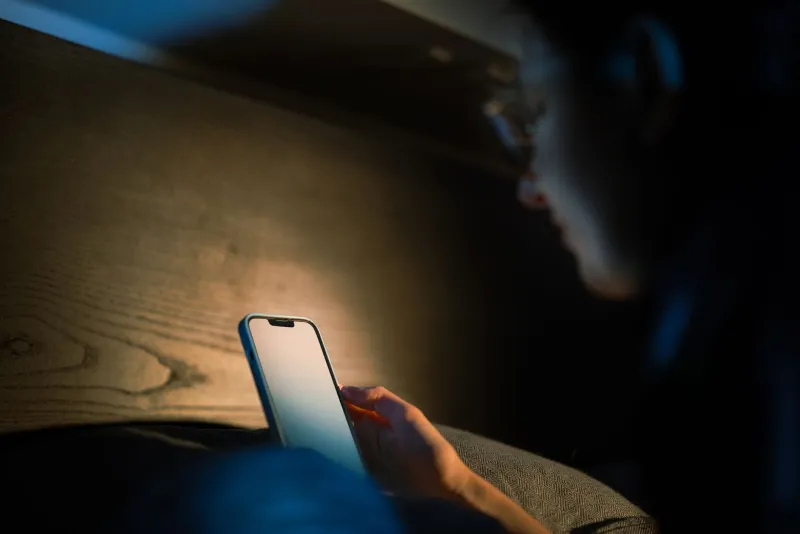
Cliffhangers Before the Check Arrives: How 2026 Anime Learned to Love Your 42-Minute Lunch

Forty-two minutes. That's what's left of a lunch break after the walk to the kitchen and the microwave queue, and it's roughly two anime episodes if you skip the openings. In 2026, a lot of the season seems to have been measured against that number — not because anyone in a Tokyo production office is thinking about your break room, but because the release calendar, the recap conventions, and the cliffhanger math keep landing in the same place.
Call it the lunch-break season. Here's the evidence, and here's how to tell which shows actually want your full attention.
The drop time is the first clue
Japanese late-night broadcast slots mostly sit between 23:00 and 25:00 JST, which translates to late morning or early afternoon on the US East Coast. That part isn't new. What's noticeable in 2026 is how many of the season's most-talked-about titles land in the 12 to 1 p.m. ET window — the slice that lines up with lunch on both coasts if you squint at it.
Some of that is a broadcast artifact and some of it is a licensing one. But when a distributor knows the biggest same-day audience is a person holding a phone at midday, every downstream decision starts to lean that way.
Recaps shrank, then got smarter
The "previously on" segment used to be a 45-second courtesy for anyone who missed a week. This season it's often 15 to 25 seconds, cut like a trailer, and dropped after a cold open instead of before it. That's a mobile-first choice whether or not anybody labels it that way: it rebuilds the emotional stakes in the time it takes to unlock a phone, and it still works if you half-watched last week's episode on the walk to the train.
The tell is what the recap chooses to remind you of. A show that recaps mechanics — who's allied with whom, which artifact does what — assumes you were distracted. A show that recaps a feeling — a look, a promise, a betrayal — assumes you were present and just needs a nudge.
The cliffhanger moved earlier
Watch where the last big beat lands. Increasingly it isn't the final 20 seconds but somewhere around minute 19 or 20 of a 24-minute episode, followed by a short coda. That structure gives you something to chew on while you walk back to your desk instead of a hard cut that leaves you staring at a wall for seven days. It also happens to be the exact shape that survives a paused playback and a resumed one forty minutes later.
Half-length episodes stopped being a novelty
The 15-minute episode used to be a curiosity — a web short, a gag spin-off, a streaming exclusive nobody scheduled around. The format was already creeping into the conversation back in 2024 and 2025, and by this season it's a real programming block. It happens to fit a phone perfectly: one episode fits in a coffee break, two fit in a lunch, and the story still gets a beginning, a middle, and a hook. Pair that with the shorter 12-episode season structure that's now standard, and you get a show you can genuinely finish across a couple of weeks of lunch breaks.
Where it gets bad: scroll shows vs. focus shows
None of this is inherently a downgrade. The problem is that a show built to be interrupted and a show built to be absorbed look identical in a thumbnail grid, and one of them will feel like nothing on a phone.
Here's a rough field guide for telling them apart before you commit:
- Do scenes restate their own stakes? A scroll show re-explains the emotional situation every episode. A focus show trusts you to remember a name from episode two.
- Are there quiet scenes? Long shots, ambient sound, no dialogue. On a phone these read as dead air. In a dark room they're the whole point.
- How dense is the on-screen text? Chat logs, sign translations, overlapping subtitles. If you're reading three text layers on a five-inch screen, the show was authored for something bigger.
- Does the opener change? A rotating OP or ED usually signals a production that expects you to be tracking mood, not just plot.
- Does the episode end on information or on feeling? Information endings are designed to make you tap next on a bus. Feeling endings are designed to make you sit there a minute.
Building a lunch rotation that doesn't flatten everything
The easy move is to let the calendar decide for you — whatever dropped at noon goes on at noon. The better move is to split your week.
Give the lunch slot to shows that reward a little distance: procedurals, rewatch-friendly comfort series, anything with a strong episodic spine. Save the dense, atmospheric stuff for a slot where you can actually sit with it — a Saturday morning, headphones on, phone in landscape or cast to a TV. If a show is mid-arc and you've only got 20 minutes, use the recap as a bridge and don't apologize for it.
And if you're the kind of viewer who keeps forgetting which episode they're on, the fix isn't discipline, it's a queue. Line up two or three shows for the week, mark where you stopped, and stop letting the home screen do your planning.
The 2026 season isn't secretly anti-immersion. It's just honest about the fact that most of us press play in a hallway. The shows worth your lunch break are the ones that make that hallway feel like enough — and the ones worth your Saturday are the ones that don't.