Always Online, Always Alone: The Hidden Loneliness Behind Anime's Thriving Fan Communities
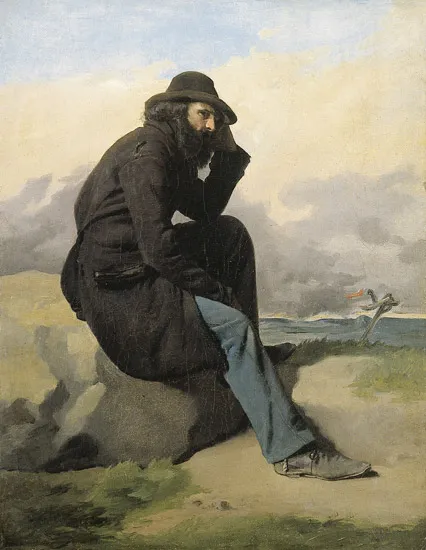
Photo: Antonio Ciseri, Public domain, via Wikimedia Commons
Here's a scenario that probably sounds familiar. It's a Tuesday night, you've just finished the latest episode of whatever seasonal anime everyone's buzzing about, and you immediately hop onto Reddit to see what the community thinks. You read through hundreds of comments, upvote a few hot takes, maybe drop a reply or two. Then you close the app, set your phone down, and feel... kind of empty.
You were just surrounded by thousands of people who love the exact same thing you do. So why does it feel like you watched that episode completely alone?
This is the quiet paradox sitting at the heart of modern anime fandom in the US — and honestly, it's worth talking about.
The Numbers Look Great. The Feelings Don't Match.
By almost every measurable standard, anime fandom has never been more connected. Subreddits dedicated to individual shows routinely hit six-figure memberships. Discord servers for seasonal anime fill up within days of a premiere. TikTok fan edits rack up millions of views before an arc even finishes airing. The infrastructure for community is genuinely impressive.
But infrastructure and belonging are two very different things.
What most of these spaces actually offer is ambient connection — the sense that other people are nearby without the substance of real relationship. You're reading what strangers think. You're reacting to takes. You're participating in a kind of collective commentary track that runs alongside the actual show. It feels social because it mimics the rhythms of conversation, but it rarely goes deeper than surface-level reaction.
And when the episode discourse dies down by Thursday? That sense of community kind of evaporates with it.
Parasocial Bonds Fill the Gap — And That's Where It Gets Complicated
When real community feels thin, a lot of fans — consciously or not — lean harder into parasocial relationships. That might mean getting deeply emotionally invested in a fictional character, following a favorite voice actor's every social post, or building a parasocial bond with a content creator who reviews anime on YouTube.
None of this is inherently bad. Caring about fictional characters is literally the point of storytelling. But there's a difference between loving a character and using that character as a substitute for human connection.
When your most meaningful "relationship" tied to anime is with someone who will never know you exist — whether that's a streamer with 800k subscribers or a fictional protagonist — it creates a lopsided emotional dynamic. You invest. You feel seen by the content. But there's no reciprocity, no growth, no friction that comes from actually knowing another person.
For mobile-first fans who are catching episodes during a lunch break or a subway ride, this dynamic gets amplified. The consumption is solitary by design. The phone screen is a private portal. And the community, when you reach for it, is often just more content dressed up as connection.
Why Discord Servers Aren't the Answer (Even Though They Should Be)
Discord was supposed to fix this. And in some cases, for some people, it genuinely has. Tight-knit servers built around specific fandoms or friend groups can create something that actually resembles community — shared jokes, real conversations, people who notice when you're gone.
But most anime Discord servers, especially the large ones, function more like chat-based comment sections than actual communities. The volume is high, the context is low, and the barrier to meaningful exchange is surprisingly steep. Saying something real in a server of 10,000 people feels about as intimate as shouting across a stadium.
Smaller servers are better, but they come with their own issues — gatekeeping, drama, the exhausting social labor of maintaining status in a group where you still haven't met anyone IRL. For a lot of US fans, especially those who don't live near a major city with an active anime scene, the options feel limited.
The Mobile Experience and the Isolation Loop
There's something worth naming specifically about how mobile anime consumption shapes this dynamic. Watching on your phone is inherently a solo act. It's designed for individual use, often consumed in stolen moments throughout the day rather than in dedicated shared viewing sessions.
The convenience is real — AnimeHay exists precisely because anime on the go is how a huge chunk of fans actually engage with the medium. But that convenience comes with a tradeoff. The more seamlessly you can consume anime alone, the less natural friction there is to push you toward watching with someone.
Back when you had to gather around a single TV or wait for a fansub to download on a family computer, watching anime was, by necessity, sometimes a group activity. Now it's perfectly optimized for isolation — and then we act surprised when fans feel isolated.
What Genuine Connection Actually Looks Like
This isn't a call to delete your Reddit account or leave your Discord servers. Those spaces aren't worthless — they're just not sufficient on their own.
Genuine community building for anime fans in 2025 tends to look smaller and slower than the big online spaces suggest it should. It looks like:
- Watch parties, even virtual ones where you're all streaming simultaneously and voice chatting, beat solo watching followed by Reddit scrolling every single time.
- Local anime clubs — yes, they still exist, and yes, they're worth the awkwardness of showing up somewhere new. College campuses, libraries, and local comic shops often host them.
- Finding one or two people whose taste genuinely aligns with yours and actually talking to them, rather than broadcasting takes into the void of a large server.
- Engaging with smaller creators — not just watching, but actually commenting with something real, because smaller communities built around niche taste often have more genuine back-and-forth.
The goal isn't to be more online. It's to be more intentional about what you're actually getting out of the time you spend in these spaces.
You're Not the Problem — But You Can Still Change the Pattern
If any of this resonates, it's worth sitting with the discomfort for a second rather than immediately opening another thread. The loneliness a lot of anime fans feel isn't a personal failure — it's a pretty predictable outcome of platforms that are optimized for engagement, not connection.
The good news is that anime itself is one of the richest conversation starters out there. The medium covers grief, identity, belonging, ambition — the full spectrum of what it means to be human. That's genuinely powerful material for building real relationships, if you can find the right people to share it with.
You're not going to find them by refreshing the episode discussion thread for the fourth time. But you might find them by actually reaching out to the person whose comment made you stop and think.
That's still how it works, even in 2025.